The Craft of ScreenWriting: Why Great Villains Make Better Heroes
Walk into almost any bookstore or writing conference, and you’ll eventually hear the same discussion. Writers compare their favorite villains. Someone praises Hannibal Lecter’s intelligence. Someone else argues that Darth Vader is one of cinema’s greatest antagonists. The Joker inevitably enters the conversation, followed by Moriarty, Voldemort, Nurse Ratched, Anton Chigurh, Captain Ahab, or another unforgettable adversary. Before long, the conversation shifts toward creating villains who are more ruthless, more unpredictable, or more charismatic than those readers have seen before.
It is an enjoyable discussion, but it often begins with the wrong question.
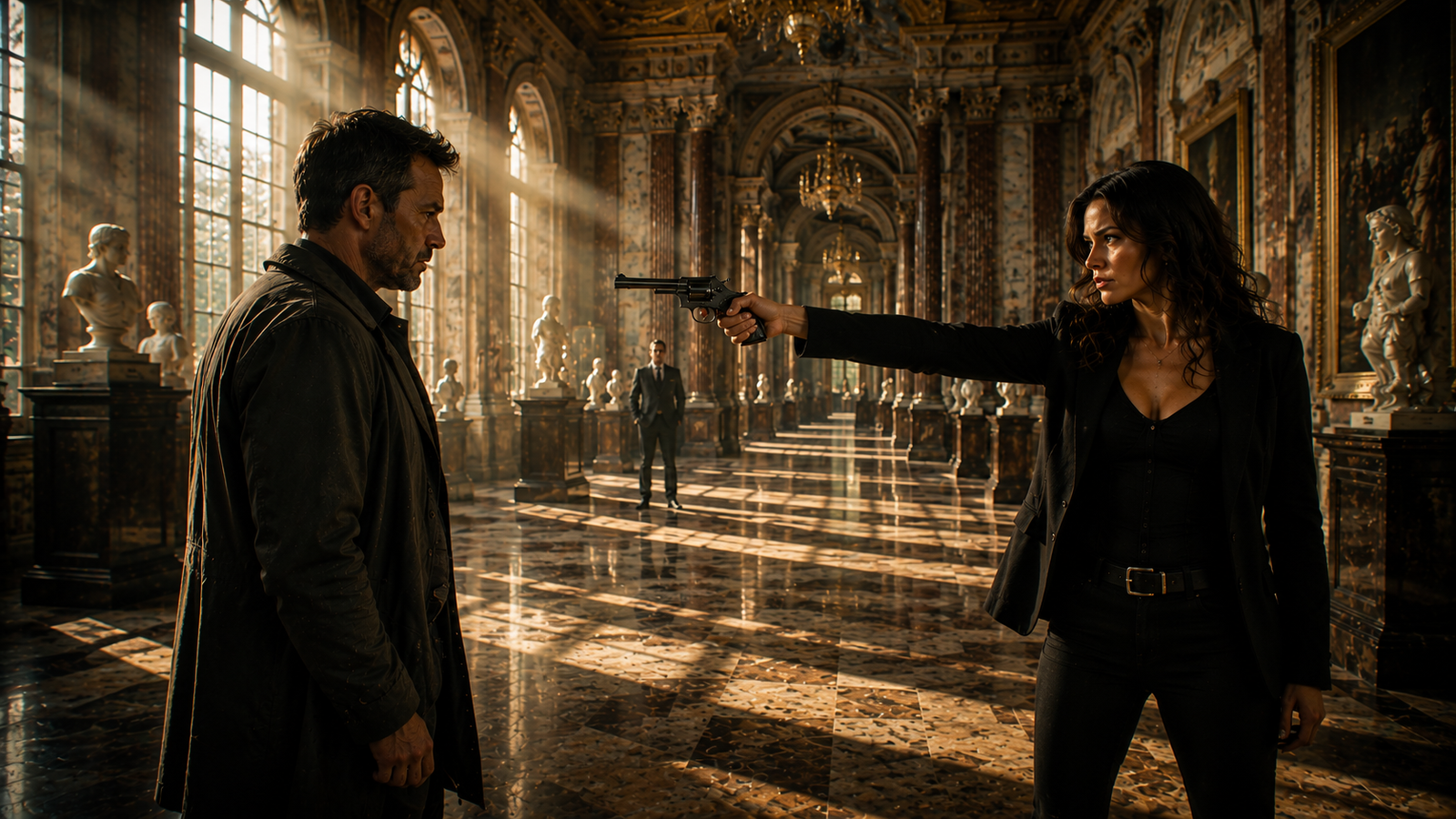
The goal is not to create a villain readers admire for being evil. Nor is it simply to invent an antagonist capable of generating exciting action scenes or shocking plot twists. Those qualities may make an antagonist entertaining, but entertainment alone is not what gives a story lasting power. Readers remember great villains because those characters force equally memorable heroes into existence. Without extraordinary opposition, extraordinary protagonists rarely emerge.
This is one of the quiet truths that separates competent storytelling from exceptional storytelling. A protagonist does not reveal their true character while life is going according to plan. Character is revealed under pressure, when every comfortable belief is challenged, every easy solution disappears, and every decision carries genuine consequences. The antagonist is the architect of that pressure. Every obstacle they create, every difficult choice they force upon the protagonist, and every weakness they expose becomes another step in the hero’s transformation. Remove that pressure, and the character arc often collapses with it.
Many beginning writers think of antagonists primarily as obstacles. They exist to delay the hero’s progress toward an external goal. The detective must catch the killer. The knight must defeat the tyrant. The astronaut must survive the alien organism. The lawyer must expose the corrupt corporation. These external conflicts certainly matter, but they are only the visible layer of the story. Beneath every memorable conflict lies a more important question: what kind of person must the protagonist become in order to succeed? The answer to that question almost always depends upon the antagonist.
Consider Luke Skywalker at the beginning of Star Wars. He is optimistic, impatient, and eager to escape his ordinary life. Had his greatest challenge simply been learning to fly an X-wing or rescue a princess, he might have remained essentially the same person throughout the story. Darth Vader changes everything because Vader represents far more than physical danger. He embodies fear, authoritarian control, temptation, and eventually the possibility that Luke himself may inherit the darkness he is fighting. Every confrontation between them pushes Luke toward decisions that define his identity rather than merely advance the plot. By the conclusion of the original trilogy, Luke’s greatest victory is not that he survives the Emperor’s throne room. His greatest victory is refusing to become the very thing his enemies expected him to become.
That distinction matters because it reveals the true function of an antagonist. Great villains do not simply threaten the hero’s life. They threaten the hero’s identity.
Once writers begin looking at antagonists through that lens, an interesting pattern begins to emerge. The villains who remain in our cultural imagination for decades are rarely remembered because they are the most physically powerful. They endure because they understand exactly what must be attacked to force the protagonist into making impossible choices. Hannibal Lecter recognizes Clarice Starling’s deepest insecurities long before she fully understands them herself. The Joker recognizes that Batman’s greatest strength—his unwavering moral code—is also the point where he is most vulnerable. Javert understands that Jean Valjean’s compassion repeatedly places him at odds with a legal system that cannot recognize redemption. These antagonists are dangerous not because they possess greater strength than the hero, but because they recognize where the hero can be broken. That observation leads naturally to one of the most overlooked principles in storytelling. The strongest antagonists attack beliefs before they attack bodies.
Action scenes are exciting, but action rarely changes people on its own. Ideas change people. Convictions change people. Moments that force someone to question their understanding of the world change people. Great antagonists recognize this instinctively, whether they realize it or not. Every confrontation becomes an argument expressed through action rather than dialogue alone.
Perhaps no modern film demonstrates this more effectively than The Dark Knight. The Joker is often described as an agent of chaos, but that description barely scratches the surface of what makes him effective. Chaos is not his objective. Chaos is merely the method by which he attempts to prove a philosophical argument. Throughout the film, he repeatedly constructs elaborate moral experiments designed to demonstrate that Batman’s faith in justice, law, and ordinary people is fundamentally misplaced. Every scheme, from Harvey Dent’s corruption to the ferry dilemma, is built upon the same central premise: given enough pressure, everyone abandons their principles.
Notice how this transforms every encounter between hero and villain. Batman is never simply trying to stop another criminal. He is attempting to preserve an idea—that moral restraint still matters even when facing unimaginable evil. If Batman compromises that principle by killing the Joker, then the Joker wins regardless of who survives the final confrontation. Suddenly the climax is no longer about fists, gadgets, or explosions. It is about whether Batman can prove his worldview is stronger than the Joker’s.
That is ideological conflict at its finest.
Unfortunately, many stories never reach this level because the antagonist wants something that exists entirely outside the protagonist. They want money. Political power. World domination. Revenge. Immortality. Those goals can certainly drive an engaging plot, but they do not automatically create meaningful conflict. A story becomes dramatically richer when the antagonist’s objectives directly challenge the protagonist’s beliefs rather than simply interfering with their plans.
Les Misérables provides an entirely different example while illustrating the same principle. Inspector Javert is not driven by cruelty. He genuinely believes civilization depends upon unwavering obedience to the law. Jean Valjean gradually becomes living evidence that mercy can accomplish what punishment cannot. Their conflict therefore extends far beyond one man pursuing another. Every encounter forces Javert to confront evidence that contradicts the philosophy upon which he has built his life. Valjean is not merely escaping arrest. He is unintentionally dismantling Javert’s understanding of justice itself. When that worldview finally collapses, Javert discovers that he can no longer reconcile his identity with the reality before him.
Stories built upon ideological conflict rarely feel repetitive because every confrontation develops both the external and internal narrative simultaneously. A chase scene becomes a philosophical argument. A courtroom becomes a battlefield of competing moral systems. Even a quiet conversation across a dinner table can generate extraordinary tension because readers understand that every exchange is shaping the protagonist’s eventual transformation.
Once writers understand ideological conflict, another pattern becomes impossible to ignore. Many of the greatest antagonists are not opposites of the hero. They are reflections.
A mirrored antagonist begins from remarkably similar emotional foundations yet arrives at completely different conclusions. They often possess comparable intelligence, determination, or talent. Frequently they have experienced similar losses or injustices. The difference lies not in what happened to them but in the meaning they assign to those experiences. By presenting two people who could plausibly have exchanged places under different circumstances, the story forces both the protagonist and the audience to consider how fragile the boundary between hero and villain can become.
This is precisely why Killmonger is such an effective antagonist in Black Panther. It would have been easy to write him as a conventional conqueror motivated solely by ambition. Instead, the film grounds his anger in legitimate historical grievances. He recognizes suffering that T’Challa has been sheltered from, and he refuses to accept Wakanda’s isolation while millions of people of African descent continue to endure oppression across the world. His diagnosis of the problem is not entirely wrong.
His solution is.
Killmonger believes generations of violence can only be answered through greater violence. T’Challa initially believes isolation protects his people from repeating history’s mistakes. Neither position ultimately proves sufficient. What makes the conflict compelling is that Killmonger forces T’Challa to recognize weaknesses in his own worldview. By the end of the story, the hero has not simply defeated the villain. He has absorbed part of the villain’s criticism while rejecting the villain’s methods. That is the hallmark of a great antagonist. The hero wins the conflict, but the antagonist changes the hero.
The same principle explains why Professor X and Magneto have remained compelling for more than sixty years across comics, films, and television. Reduce their relationship to “hero versus villain,” and much of its power disappears. Both men have experienced persecution. Both want to secure a future for mutantkind. Both possess extraordinary intelligence, remarkable leadership abilities, and an unwavering commitment to protecting their people. Their disagreement concerns neither competence nor conviction. It concerns philosophy.
Professor Xavier believes peaceful coexistence with humanity remains possible despite centuries of fear and prejudice. Magneto believes history has already answered that question. Having survived humanity at its worst, he sees compromise as naïve and restraint as dangerous. Each man can point to evidence supporting his position, which prevents either from becoming a caricature. Every encounter therefore becomes more than another battle involving mutant powers. It becomes a debate about justice, survival, forgiveness, and fear. The audience is not merely wondering who will win. They are weighing competing worldviews alongside the characters.
This illustrates why mirrored antagonists are often more memorable than villains who are evil simply because the story requires someone to oppose the hero. When the antagonist represents a path the protagonist might plausibly have taken, every confrontation becomes deeply personal. The hero is no longer fighting only another person. They are fighting the possibility of becoming that person themselves. That possibility creates another responsibility for the antagonist. They must continually test the protagonist rather than merely attack them.
There is an enormous difference between creating danger and creating transformation. Danger threatens survival. Transformation threatens identity. A villain who relies exclusively on physical danger can produce entertaining action sequences, but a villain who systematically tests the protagonist’s beliefs produces lasting emotional impact.
Think again about Hannibal Lecter in The Silence of the Lambs. Despite his terrifying reputation, Lecter spends remarkably little time trying to overpower Clarice Starling physically. Instead, he studies her. Every conversation is an interrogation disguised as a negotiation. He notices the subjects she avoids, the memories that still haunt her, the insecurities she attempts to conceal beneath professionalism, and the emotional wounds that continue influencing her decisions. Before he offers information about Buffalo Bill, he demands something in return—not money or freedom, but honesty.
That requirement transforms every meeting between them into a psychological contest. Clarice cannot simply gather clues. She must repeatedly confront parts of herself she would rather leave buried. The investigation and the character arc become inseparable because the antagonist insists they remain inseparable.
Notice how different that feels from a conventional thriller in which the villain merely leaves clues behind for the detective to discover. Lecter is actively shaping Clarice’s journey. He is not helping her become a better investigator out of generosity, of course. He is satisfying his own curiosity while enjoying the intellectual game. Yet the effect remains the same. Clarice emerges stronger, wiser, and more self-aware because she has survived contact with someone uniquely capable of exposing her weaknesses.
The best antagonists perform this function throughout the story. They refuse to allow the protagonist to rely on comfortable habits or familiar solutions. Every apparent victory is followed by another challenge specifically designed to invalidate whatever strategy worked previously. In doing so, they prevent the hero from remaining static.
This is why stories often lose momentum when the antagonist becomes passive after the opening act. Once the villain stops adapting, the protagonist no longer needs to adapt either. Scenes become repetitive because the conflict has stopped evolving. The audience may continue wondering how events will end, but they stop wondering who the protagonist will become.
Professional storytellers avoid this trap by allowing the antagonist to learn.
A convincing villain is rarely omniscient. They begin the story with incomplete information, make incorrect assumptions, encounter unexpected resistance, and gradually adjust their approach just as the protagonist does. Every confrontation teaches them something about their opponent. Every setback forces them to reconsider their strategy. This evolution creates the feeling that two intelligent people are genuinely engaged in a contest rather than simply following predetermined plot beats.
Consider Sherlock Holmes and Professor Moriarty. Holmes succeeds because he continually anticipates the reasoning of others. Moriarty remains fascinating because he is one of the few individuals capable of returning that favor. Their conflict works precisely because each recognizes the other’s intelligence and continually adjusts accordingly. Imagine how much less compelling their rivalry would become if Moriarty simply repeated the same plan three or four times while Holmes effortlessly dismantled it. The audience would quickly stop respecting the antagonist, and as a consequence, they would stop being impressed by Holmes’s victories.
That relationship points toward another lesson many writers overlook. Heroes are not made impressive by making them unstoppable. They become impressive by surviving opponents who force them to grow beyond what they believed possible.
Unfortunately, many stories accidentally undermine their protagonists by giving them weak opposition. The hero solves every problem quickly, predicts every twist, wins every confrontation, and reaches the climax with little emotional or moral cost. While this approach may temporarily flatter the protagonist, it often has the opposite long-term effect. Readers instinctively recognize when success has not been earned.
Imagine if Rocky Balboa defeated Apollo Creed in the opening minutes of their first fight. Imagine Frodo carried the One Ring to Mount Doom without ever feeling its corrupting influence. Imagine Clarice Starling identified Buffalo Bill after interviewing one witness. Technically, the protagonists would still accomplish their goals. Dramatically, however, the stories would lose much of what makes them memorable because the audience would never witness genuine struggle or meaningful growth.
Readers celebrate perseverance far more readily than perfection. Every major obstacle overcome becomes evidence that the protagonist has earned the right to succeed. Every painful failure, every difficult compromise rejected, every lesson painfully learned adds emotional weight to the eventual victory. The antagonist is responsible for creating those opportunities. Without formidable opposition, the climax becomes little more than confirmation of abilities the audience already assumed the hero possessed.
That is one reason No Country for Old Men remains so unsettling decades after its release. Anton Chigurh is not frightening merely because he kills people. Countless fictional villains kill people. Chigurh is terrifying because he operates according to a personal logic that remains almost completely immune to negotiation, intimidation, or emotional appeal. Llewelyn Moss repeatedly discovers that conventional approaches to survival simply do not work against him. Every decision carries unforeseen consequences because Chigurh continually adapts while remaining utterly consistent with his own worldview.
The audience begins to understand that this is not a contest that can be won through superior marksmanship or clever improvisation alone. Moss is facing an opponent who forces everyone around him to confront uncomfortable truths about chance, morality, and mortality. Whether one interprets Chigurh literally or symbolically, his presence transforms every scene because he continually raises the cost of survival.
This increasing cost is essential. The climax of a memorable story should not feel like the hero finally discovering an easier solution. It should feel like the culmination of everything the antagonist has forced them to learn.
By the final confrontation, the protagonist should possess knowledge, resilience, humility, or moral clarity they simply did not have at the beginning of the story. The audience should be able to trace that transformation directly back to the challenges imposed by the antagonist. In that sense, the villain becomes an unwilling mentor. Every setback becomes another lesson. Every defeat becomes another opportunity to grow. Every apparent loss becomes another step toward becoming the person capable of achieving the final victory.
When you reach the revision stage of your own novel or screenplay, spend less time asking whether your villain is frightening enough or original enough. Those questions certainly matter, but they are secondary. Instead, examine every major confrontation and ask a more revealing series of questions. What weakness does the antagonist expose in this scene? What assumption does the protagonist lose because of this encounter? How has the hero been forced to change before the next confrontation occurs? If you removed this particular scene, would the protagonist still become the same person by the ending? If the answer to that final question is yes, the antagonist probably is not doing enough work.
The strongest villains leave permanent marks on the protagonists they oppose. They do not simply delay the hero’s progress toward the climax. They shape the very person who arrives there. Long after the final battle has ended, the protagonist continues carrying the lessons, scars, and wisdom earned through that conflict.
That is why audiences continue discussing Darth Vader and Luke Skywalker, Batman and the Joker, Clarice Starling and Hannibal Lecter, Jean Valjean and Javert, Sherlock Holmes and Moriarty, or T’Challa and Killmonger years—even decades—after first encountering them. These rivalries endure because neither character exists solely to support the other. Each defines the other. The antagonist exposes strengths the protagonist never knew existed, while the protagonist ultimately proves that the antagonist’s understanding of the world is incomplete.
The greatest villains are not memorable because they are evil. They are memorable because, without them, the heroes we admire would never have become heroes at all.
By John Morgan Risner
Fade In Is Just The Beginning

The Craft of Writing: Why Strong Female Characters Matter (And Why Most Writers Still Get Them Wrong)
The Craft of Writing: Story Ideas — Where Great Stories Begin


John Risner
John Morgan Risner is a screenwriter, novelist, and story analyst, and the founder of Screen Writer Ink. With over a decade of experience teaching screenwriting and filmmaking at the university level, he has helped writers develop stronger stories through a focus on character, structure, and cinematic storytelling. His work spans multiple genres, including thriller, horror, and mystery, with an emphasis on character-driven narratives. He is also a film historian with a deep knowledge of classic and modern cinema, including the James Bond films and novels. Through Screen Writer Ink, he provides writers with practical, experience-based insight into the craft of storytelling—helping them move beyond theory and write with clarity, purpose, and control.


