The Craft of Screenwriting: Genres
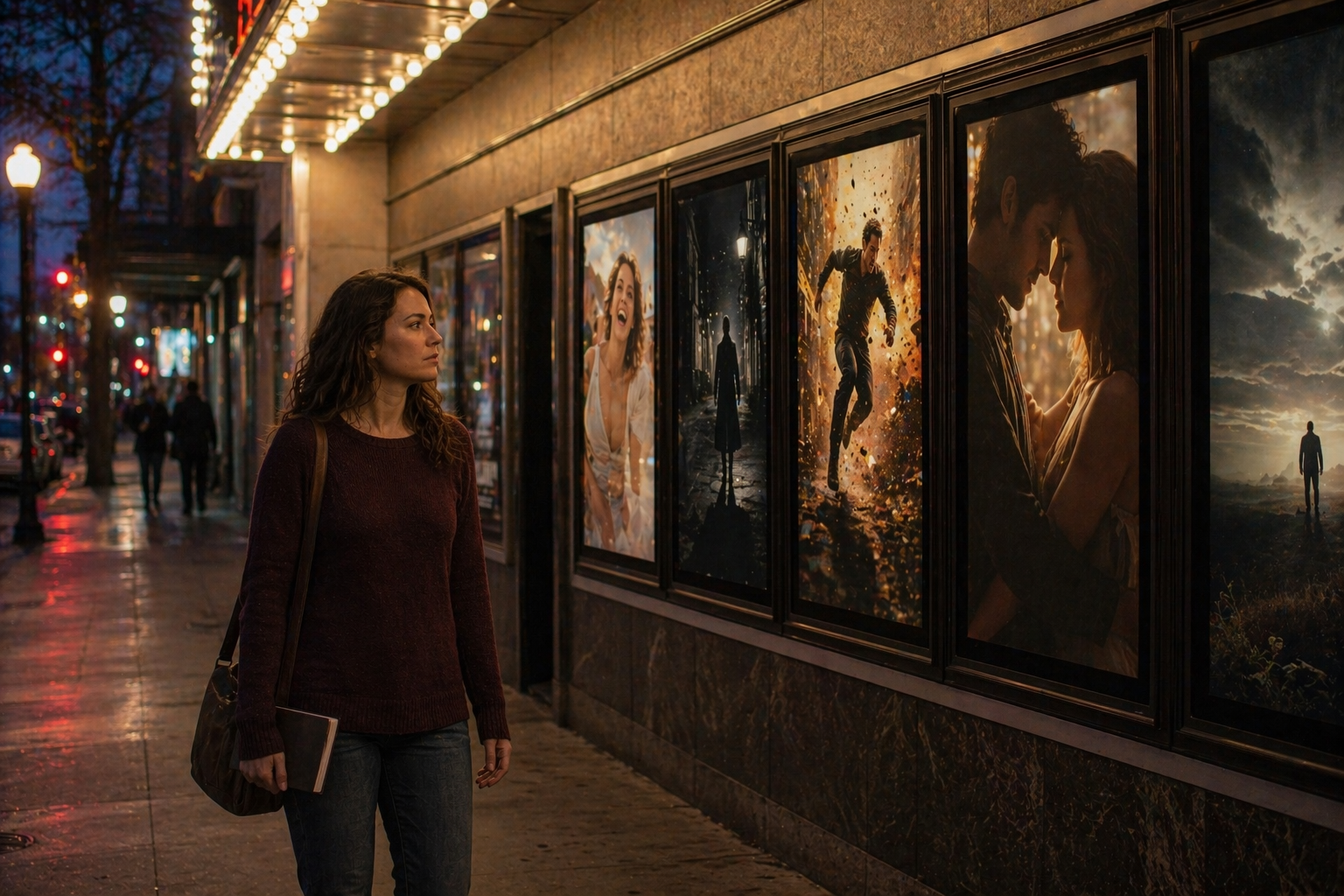
Not long ago, genre films were often dismissed as B-movies—low-budget, formula-driven stories designed to fill space on a studio’s release schedule. That perception is long gone. Today, genre films dominate the box office and drive success across streaming platforms. They are not second-tier storytelling. In many cases, they are the most effective and emotionally resonant experiences audiences can have.
For screenwriters, genre is not a label applied after the fact. It is a foundational storytelling tool. It shapes structure, tone, pacing, conflict, and character. More importantly, it shapes expectation. The moment an audience recognizes a genre, they begin anticipating a specific kind of experience. That expectation is not a burden—it is an opportunity.
A strong screenplay does not ignore genre. It understands it.
Genre tells the audience what emotional ride they are about to take. A thriller promises tension and uncertainty. A horror film promises fear and vulnerability. A comedy promises release through laughter. A drama promises emotional depth and transformation. These are not loose guidelines—they are part of the contract between the story and the audience.
Writers who treat genre as an afterthought often produce scripts that feel unfocused. The scenes may be well written, the characters interesting, but the experience feels inconsistent. The tone shifts unpredictably. The pacing drifts. The story no longer knows what it is trying to be.
Writers who understand genre early make stronger choices. Every scene, every beat, every line of dialogue begins serving a clear purpose.
A genre, at its core, is a classification that signals what kind of story the audience is about to experience. Horror, comedy, action, romance—each carries recognizable elements that define it. These elements are known as conventions. Audiences expect them, whether consciously or not. That expectation is what allows a writer to guide, satisfy, and occasionally surprise.
Knowing the conventions does not make a story predictable. It gives the writer control. Once you understand the rules, you can bend them, subvert them, or reinforce them with intention. That is where originality comes from—not from ignoring structure, but from mastering it.
Genre is also one of the most practical tools a writer has. It helps clarify structure, identify essential story beats, and maintain tonal consistency. It prevents logic gaps that break immersion. It even plays a role in how a script is positioned in the marketplace. But its greatest value is creative. It gives you a framework to build from, so your energy can go into execution instead of uncertainty.
There is one rule that applies across all genres, and it is non-negotiable: the audience must believe the story.
This is the principle of suspension of disbelief—the audience’s willingness to accept the world you present, no matter how grounded or fantastical, as long as you remain consistent with the rules you establish. Once those rules are broken without justification, the illusion collapses.
A story set in a grounded historical world cannot suddenly introduce advanced technology unless that possibility was built into the narrative early. A supernatural story cannot arbitrarily change how its own mythology works just to solve a problem. The audience will follow you anywhere—but only if you respect the internal logic of your world.
This is also why genre affects runtime and pacing. Some genres demand tighter control than others. Horror and comedy, in particular, often run shorter because they rely on heightened emotional states—fear and laughter—that are difficult to sustain for extended periods without losing effectiveness. The longer those states are stretched without progression, the more likely the audience is to disengage and begin questioning the premise.
A tightly constructed genre film maintains immersion. It understands how long it can hold the audience in a specific emotional space before that space begins to weaken.
There are countless ways to categorize genres. Some systems list dozens of variations, while others simplify them into broader story types. Both approaches have value. For practical purposes, however, most screenwriters benefit from mastering a core group of foundational genres: action and adventure, horror, comedy, drama, thriller, mystery, fantasy, romance, and family or faith-based storytelling.
Each of these genres prioritizes different storytelling elements, and those priorities shape every creative decision.
Action and adventure stories are driven by momentum. They place characters in high-stakes situations where physical conflict and escalating danger push the narrative forward. The structure often follows a journey—whether literal or metaphorical—where the protagonist is tested, challenged, and ultimately transformed through action. These stories succeed when the external conflict forces internal change.
Horror operates on a completely different axis. It is built on fear, vulnerability, and the loss of control. Characters are often isolated, either physically or psychologically, and forced to confront a threat they do not fully understand until it is too late. The effectiveness of horror depends on atmosphere, tension, and the audience’s emotional investment in the characters’ survival. The more grounded and relatable the characters feel, the more powerful the fear becomes.
Comedy thrives on contradiction. It finds humor in misunderstanding, imbalance, and human flaw. Whether through absurd situations or subtle character dynamics, comedy depends on timing, escalation, and payoff. At its best, it is not just about making the audience laugh—it is about revealing truth through exaggeration and perspective.
Drama is rooted in emotional reality. It focuses on character, relationships, and internal conflict. While it may not rely on spectacle, it demands precision. Every scene must push the character toward growth, confrontation, or realization. The stakes are often personal rather than physical, but they are no less powerful.
Thrillers are built on pressure. They place the protagonist in situations where time is limited, options are shrinking, and trust is uncertain. The tension is sustained through constant escalation, forcing the character to make increasingly difficult choices. The question at the center of a thriller is not just what will happen, but how far the protagonist is willing to go.
Mystery stories are driven by curiosity. They begin with disruption—a crime, a disappearance, a question—and unfold through investigation. The audience is invited to participate, piecing together clues alongside the protagonist. The challenge lies in balance: revealing enough to keep the audience engaged while withholding enough to maintain intrigue. The resolution must feel both surprising and inevitable.
Fantasy expands beyond the limits of reality, but it is governed by its own internal rules. Whether set in entirely imagined worlds or layered onto the real one, fantasy depends on consistency. The magic, the mythology, the structure of the world—all of it must operate within clearly defined boundaries. When it does, the genre becomes a powerful vehicle for exploring identity, morality, and transformation.
Romance centers on connection. It explores the emotional journey between characters as they move toward or away from love. While the structure often follows familiar patterns, the success of a romance depends entirely on authenticity. The audience must believe in the relationship, not because the plot demands it, but because the characters earn it.
Family and faith-based stories focus on values, belief, and personal transformation. They often emphasize connection, growth, and meaning, offering narratives that resonate deeply with their intended audience. These stories succeed when they show change rather than preach it—when the emotional journey feels honest and earned.
Understanding these genres is not about limiting yourself to one path. In practice, many of the most compelling stories blend elements from multiple genres. A thriller may contain strong dramatic arcs. A horror film may explore deeply emotional themes. A romance may exist within a fantasy world. Blending genres can create richness and originality, but only if the core identity of the story remains clear.
When genre becomes unclear, the story loses focus. The audience no longer knows what kind of experience they are having, and that uncertainty weakens engagement. Clarity does not restrict creativity. It strengthens it.
Genre also influences every technical aspect of the screenplay. It shapes pacing, determining how quickly scenes move and how tension builds. It affects visual storytelling, guiding what the audience should notice and feel in each moment. It even influences dialogue, from the sharp, urgent exchanges of a thriller to the layered subtext of a drama or the rhythmic timing of a comedy.
These are not surface-level differences. They are structural.
Writers sometimes worry that learning genre will make their work formulaic. The opposite is true. Writers who do not understand genre tend to repeat what they have seen without realizing it. Writers who understand genre can make deliberate choices. They know when to follow convention, when to break it, and why either decision matters.
Genre is both architecture and invitation. It provides the framework that supports the story, and it signals to the audience what kind of experience they are about to enter. When those two elements align, the screenplay becomes more focused, more immersive, and far more satisfying.
Ultimately, genre exists to serve the audience’s emotional experience. The viewer does not sit down to analyze categories. They sit down to feel something—fear, excitement, laughter, tension, wonder, connection. Genre is one of the most powerful tools a screenwriter has to deliver that experience with clarity and impact.
A screenplay does not become stronger by avoiding genre. It becomes stronger by mastering it.
Fade In Is Just The Beginning.
The Craft of Writing: Why Strong Female Characters Matter (And Why Most Writers Still Get Them Wrong)
The Craft of Screenwriting – The False Choice Between Character and Plot

The Craft of Screenwriting: The Parts of a Screenplay

John Risner
John Morgan Risner is a screenwriter, novelist, and story analyst, and the founder of Screen Writer Ink. With over a decade of experience teaching screenwriting and filmmaking at the university level, he has helped writers develop stronger stories through a focus on character, structure, and cinematic storytelling. His work spans multiple genres, including thriller, horror, and mystery, with an emphasis on character-driven narratives. He is also a film historian with a deep knowledge of classic and modern cinema, including the James Bond films and novels. Through Screen Writer Ink, he provides writers with practical, experience-based insight into the craft of storytelling—helping them move beyond theory and write with clarity, purpose, and control.


