THE CRAFT OF WRITING: Seeing Your Characters – Using AI Images as a Writing Reference Tool
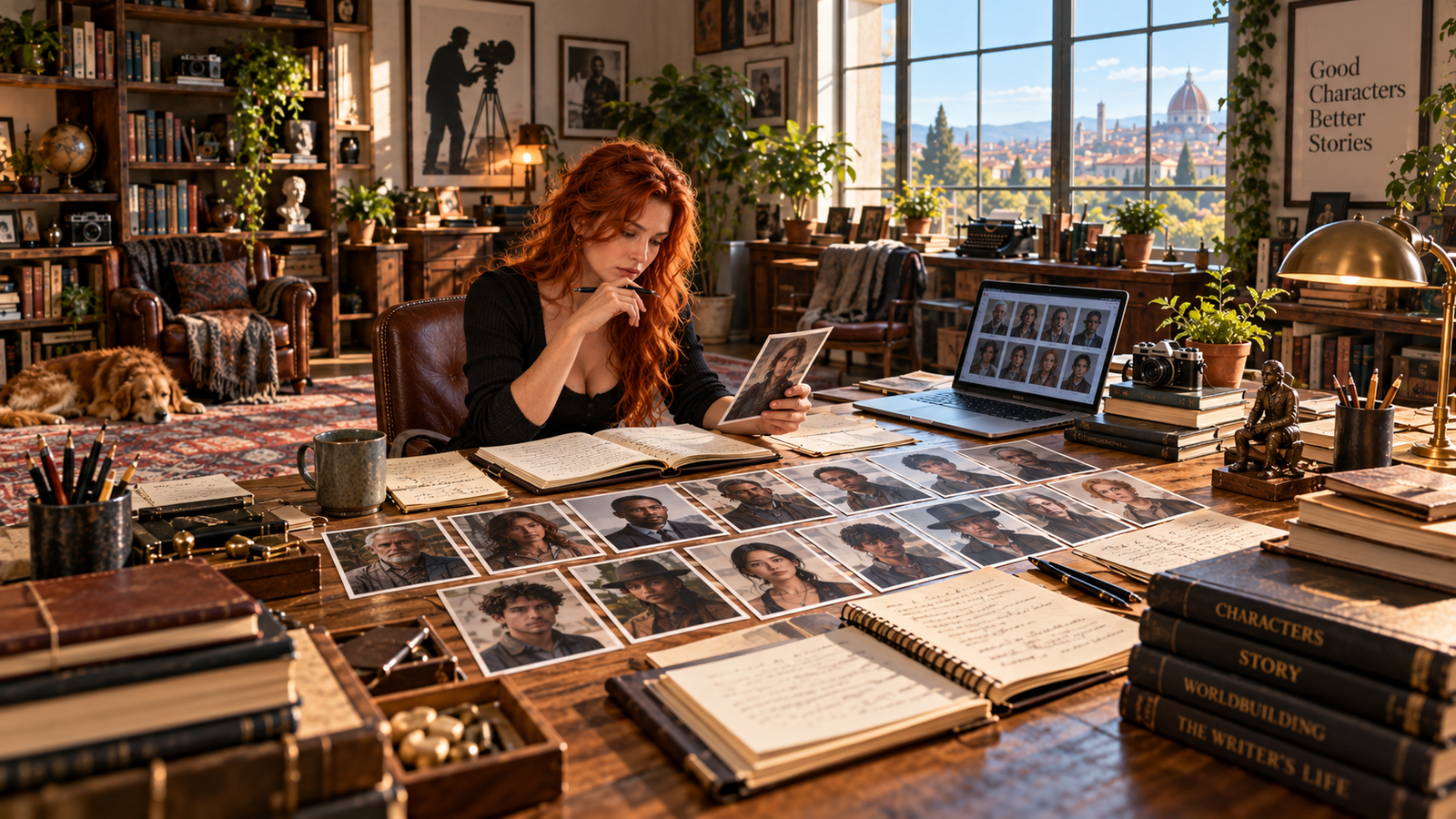
Writers have been casting their characters in their heads for a very long time. Before Pinterest boards, digital reference libraries, and AI image generators, we clipped photographs from magazines, saved publicity stills of actors, collected fashion photographs, or kept folders filled with faces that reminded us of people in our stories. Sometimes the resemblance was remarkably close. More often, the photograph gave us part of what we were looking for. Maybe the actor had the right face but was twenty years too young, or the model had the right physical presence but completely wrong hair. We mentally made the adjustments and used the photograph for what it was: a reference that helped us hold on to the person we were imagining.
There is nothing particularly revolutionary about that practice. Writers use visual references all the time. If you are writing about a house in Savannah, a ranch in Montana, a street in Paris, or a castle in medieval England, you are probably going to look at photographs. Historical writers research clothing, furniture, tools, architecture, and transportation. Crime writers look at police stations, courtrooms, weapons, and evidence procedures. Fantasy writers build maps and collect images that suggest the physical world they are trying to create. Visual research helps us turn something abstract in our imagination into something specific enough to describe consistently.
Character photographs have always served much the same purpose. The difference now is that AI image generation allows a writer to create a visual reference much closer to the character already in their imagination instead of searching for a photograph that happens to approximate that person.
That last part is important because I am not suggesting that writers turn character creation over to an image generator. If you type “give me a beautiful female detective” and choose whichever result looks coolest, you haven’t developed much of a character. You have found an attractive photograph of an imaginary person. The useful application comes when you have already made decisions about who the character is and use the technology to help visualize those decisions.
From Casting an Actor to Seeing Your Character
Most writers who use actor photographs as references know how quickly the description turns into qualifications. “I picture him a little like this actor, except he’s older, heavier, has longer hair, and isn’t nearly as polished.” At some point, the photograph is doing surprisingly little work.
There is another complication when the reference is a famous actor. Actors arrive with history. If I tell you to imagine George Clooney, you do not simply picture a handsome man in his sixties. You bring some combination of the characters you have watched Clooney play, his public persona, his voice, his mannerisms, and perhaps even expectations about what kind of character he usually plays. If you have mentally cast him as the protagonist of your novel, some of that baggage can begin influencing the character without you realizing it.
An original visual reference can help separate the fictional character from the actor who initially inspired the image. Perhaps what attracted you to Clooney as a reference was the character’s age, confidence, charm, or ability to appear comfortable in expensive surroundings. Those qualities can remain while everything else changes. You can create a man with a different face, build, hairstyle, wardrobe, and physical manner, then place him inside the environment of your story. Eventually the reference stops being “George Clooney playing my character” and becomes an image of the character himself.
The same process works when no actor was involved. Suppose I know a character is a woman in her late twenties, tall, physically fit without looking like a fitness model, with reddish-blonde hair, blue-gray eyes, and an olive complexion. She works around paintings and restoration materials, so I don’t imagine her spending the average workday dressed for a cocktail party. Those are already character decisions. An AI image generator allows me to work from those decisions until I create a visual approximation that feels reasonably close to the woman I have been picturing.
The technology did not create the character. It helped me create a better reference photograph.
Turning the Reference Into a Character Card
Once you have a useful image, the obvious next step is to turn it into a simple character reference card. I emphasize simple because writers have a remarkable ability to transform helpful tools into enormous projects that keep us from doing any actual writing. A character card does not need to become a twenty-page psychological profile containing every fact that might conceivably be true about this imaginary person.
Anyone familiar with my approach to character creation probably knows that I am not particularly interested in deciding what breakfast cereal a character preferred when she was nine unless that information somehow matters to the story. Character development is not trivia collection. Knowing fifty insignificant facts about someone does not necessarily make that character deeper, more complicated, or more interesting.
A useful visual character card should contain the information you are likely to need while writing. The image is the obvious centerpiece, accompanied by the character’s name, approximate age, occupation, and the physical details that matter for continuity. You might include height, hair and eye color, a distinctive scar, usual style of clothing, or a particular piece of jewelry. If posture or another physical mannerism is important, that can be included as well. The exact information will depend on the character and the story.
The test is practical. If you return to a project after several weeks away, can you look at the card and quickly reconnect with the person you were writing? If you can, the card is doing its job. If maintaining the card becomes more complicated than maintaining the manuscript, you have probably built the wrong tool.
A Useful Defense Against Continuity Errors
Physical continuity is one of the less glamorous reasons visual references can be valuable, but it may be one of the most practical. Writers generally remember the major facts about their characters. We are unlikely to forget that the protagonist is a forty-two-year-old homicide detective or that the antagonist walks with a cane. Smaller details are another matter. Somewhere between Chapter Four and Chapter Twenty-Three, hazel eyes can become green, a scar can migrate from one side of a face to the other, and shoulder-length hair can mysteriously grow halfway down someone’s back.
These mistakes become more likely as the size of the story grows. A novel with a handful of characters is one thing. A fantasy series containing several families, political factions, generations, and dozens of recurring characters asks the writer to remember an enormous amount of information. The manuscript itself remains the final authority on what has actually been established, but a visual reference gives the writer another quick way to maintain consistency while drafting.
The reference can also preserve distinctive physical details that might otherwise drift. If a character always wears a particular ring, the image can show it. If an old injury affects the way someone stands, the reference can reflect that posture. If another character has a deliberately severe haircut because she wants to project authority, that choice can remain visible every time you return to her card. These details are not substitutes for written continuity notes, but they reinforce them in a form the writer can absorb almost instantly.
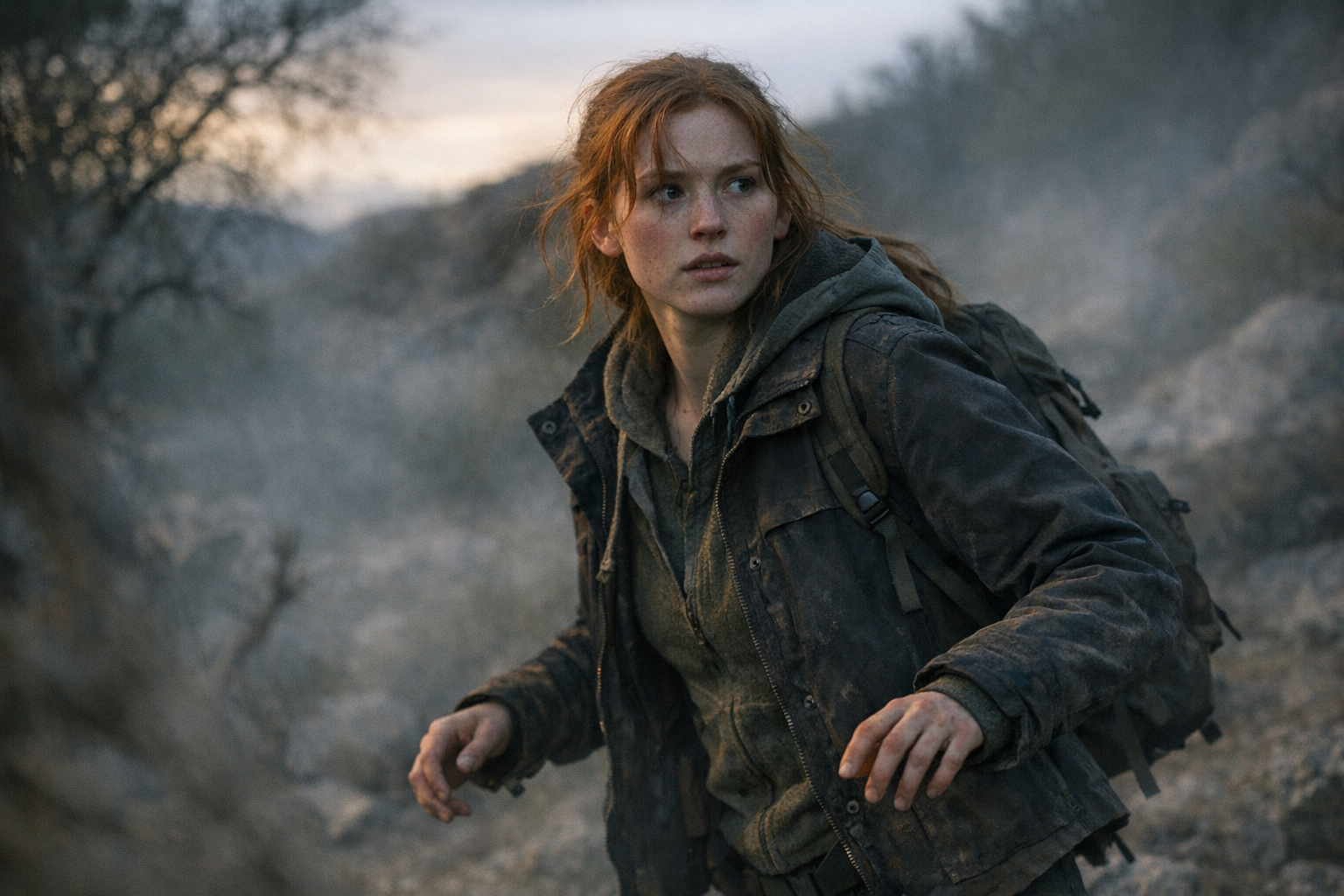
Visual references become even more useful when appearance changes during the story. Imagine a corporate attorney who begins a thriller impeccably dressed because control and professional presentation are essential parts of her identity. Halfway through the story, she has spent three days running from people trying to kill her, slept in a car, lost her luggage, and is wearing clothes she bought at a convenience store. A second reference image can help the writer visualize how much has changed while making certain she remains recognizably the same woman. The contrast between those two images may also suggest something about the character’s journey that was less obvious when it existed only in prose.
Look at the Cast Together
One of the more interesting benefits appears when you stop looking at character references individually and put the principal cast together. Characters are usually created one at a time, which makes it easy to miss patterns that become obvious when you see everyone at once. You may discover that nearly every important character is between thirty and forty, conventionally attractive, reasonably fit, and dressed with approximately the same degree of taste. None of those choices seemed unusual when you made them individually, but together they can make the population of your story feel artificially narrow.
Genre conventions can make the problem even more noticeable. A fantasy cast may gradually acquire the same romanticized medieval appearance because the writer has unconsciously borrowed visual expectations from other fantasy stories. A contemporary police thriller can end up populated by men with similar builds, haircuts, wardrobes, and carefully maintained stubble. A wealthy family may look less like people who share a complicated history and more like models selected for the same luxury advertisement. When the images are viewed together, those similarities are much harder to overlook.
This does not mean every character needs an eccentric appearance or that differences should be manufactured merely to make the cast look more varied. The useful question is whether their appearances suggest that these people have lived different lives. Age, profession, income, culture, personal taste, vanity, insecurity, and simple indifference all affect how people present themselves. A retired judge should not automatically look like a thirty-year-old detective with gray hair added, just as two sisters can share obvious family characteristics while having completely different relationships with clothing, makeup, fitness, and appearance. A cast reference gives the writer an opportunity to notice those distinctions before accidental sameness becomes embedded throughout the manuscript.
Put the Character Into the Story
A portrait against a neutral background is useful when you are establishing a face, but I think the technique becomes much more interesting when you take the character out of the imaginary photography studio and put them into the world of the story.
If your protagonist owns a struggling neighborhood restaurant, show him in the restaurant after closing. If she inherited her grandfather’s art gallery, put her among the paintings, restoration equipment, storage rooms, and old architecture that will surround her throughout the story. A sheriff should eventually be seen somewhere that tells us what kind of community he polices. A character in an 1875 Western should be tested against the actual clothing and physical environment of that world rather than existing forever as a beautifully lit portrait.
Doing this changes what you are evaluating. Instead of simply deciding whether you like the character’s face, you begin asking whether this person appears to belong in the life you have created for them. A wardrobe that seemed perfectly reasonable in isolation may suddenly feel too polished for the character’s occupation. Someone who supposedly spends every day doing physical labor may look as though he has never lifted anything heavier than a coffee cup. A character who comes from considerable wealth may look like someone trying much too hard to advertise it, which could be exactly right if that insecurity is part of the character and completely wrong if it isn’t.
Those discoveries can push you back toward the writing in useful ways. Why does this character dress this way? Is the choice practical, cultural, professional, economic, or psychological? Does she want to disappear into a room or control it when she enters? Is he wearing expensive clothes because he comes from money or because he desperately wants people to think he does? The image does not answer those questions for you. It gives you something concrete enough to make you ask them.
Appearance Can Change With the Story
Characters do not necessarily look the same from beginning to end, and visual references can help a writer think about appearance as part of the storytelling rather than a description established in Chapter One and forgotten.
Some changes are obvious. A character ages twenty years, survives an accident, becomes ill, loses a significant amount of weight, returns from war, or spends months living under terrible conditions. Other changes can be quieter. A woman who dresses meticulously because she is desperate to be taken seriously may gradually stop constructing her appearance around other people’s approval. A man who has spent his life hiding behind expensive suits may become less formal as the identity he built begins falling apart. Clothing, grooming, posture, and physical condition can all reflect what has happened without requiring the character to explain the change.
This becomes particularly useful when physical transformation is important to the story. In You Are What You Eat, the women at the center of the story undergo a transformation that significantly changes their apparent ages while their identities remain the same. If the younger versions look like completely different women, the visual concept fails. The challenge is preserving recognizable facial identity while showing a substantial reduction in apparent age. Working through that visually can help clarify exactly what the transformation means before trying to communicate it in prose or eventually on screen.
The same technique could apply to a fantasy character gradually affected by magic, someone deteriorating during a horror story, or a protagonist seen at several different periods of life. The writer can compare the images and decide what should remain constant, what should change, and whether the progression actually feels believable.
When the Picture Starts Controlling the Character
There is a danger in all of this, and it is worth taking seriously. A compelling image can create the illusion that you have created a compelling character.
You haven’t.
A beautifully generated woman with a fascinating face, perfect wardrobe, and cinematic lighting may still be completely dead on the page. Appearance cannot give her an objective, create meaningful contradictions, determine what she is willing to sacrifice, or decide how she behaves when someone she loves becomes an obstacle to something she desperately wants. Those things come from writing the character through choices, relationships, pressure, and consequences.
The image can also become restrictive if the writer becomes too attached to it. Suppose you have spent considerable time creating the perfect reference for your elegant protagonist. She looks exactly as you imagined her, right down to the coat. Then the story requires her to get knocked into a drainage ditch during a rainstorm and spend the next several chapters bruised, filthy, exhausted, and wearing somebody else’s sweatshirt. The story gets the final vote. The reference image is not something the manuscript has to protect.
In fact, that change may give you another useful image. The elegant woman at the beginning and the exhausted woman three days later are not competing versions of the character. They represent different points in the same experience. Seeing the contrast may help you understand how much the story has physically cost her.
Start With Character, Not the Image Generator
The weakest use of this technology is asking it to make interesting characters for you. Typing “create a cool female assassin” may produce a striking image, but a striking image is not character development. You still know almost nothing about the woman beyond an aesthetic assembled from familiar conventions.
The more useful process begins with decisions you have already made. Who is this person, and what kind of life has produced the person we meet at the beginning of the story? How does she want other people to see her? Does she care about clothing or barely notice it? Does her occupation dictate how she dresses? Is she comfortable with her body? Does she deliberately project authority, wealth, sexuality, toughness, respectability, or invisibility? Is that presentation genuine, or is it camouflage?
Once those decisions exist, the image generator has something meaningful to visualize. More importantly, you have a standard against which to judge what it produces. You are no longer asking whether the picture is attractive or interesting. You are asking whether it represents the character you have created. Sometimes the technically impressive image will be completely wrong because the person staring back at you does not feel like the person in the story. There is no reason to force the character to conform to the image. Generate another one.
That is the relationship I think writers should maintain with the technology. The writer makes the creative decisions. The tool helps visualize them.
Building a Small Visual Library
Once character cards prove useful, the same approach can be extended selectively to the world surrounding those characters. The word selectively matters because it would be very easy to spend weeks illustrating a novel instead of writing one.
Recurring locations are obvious candidates. If the protagonist’s house appears throughout the story, a visual reference may help maintain its geography and atmosphere. The same is true of a family restaurant, an inherited gallery, a mansion containing important rooms, a sheriff’s office, a university campus, or a castle that serves as the center of a fantasy series. Important objects can also benefit from references when their appearance matters to the story. A distinctive ring, painting, sword, automobile, piece of jewelry, or artifact becomes easier to describe consistently once you have decided what it actually looks like.
The result can be a modest visual library containing the major characters, a few important locations, significant objects, and perhaps alternate images showing characters at different stages of the story. For someone working on several projects, this can make returning to a manuscript much easier. After months away, you do not have to reconstruct every visual decision from memory before you can get back into the world.
There is also a potential benefit if the project eventually moves into another medium. A novel that becomes a screenplay, comic, illustrated edition, or film project will require much more extensive visual development later. Your original reference images are not production designs and should not be treated as such, but the process of creating them forces you to think about the visual identity of the story long before those questions become expensive.
The Tool Changed. The Writer’s Job Didn’t.
AI image generation is useful to writers because it improves something many of us were already doing. We used to clip photographs from magazines, save pictures of actors, sketch characters in notebooks, or maintain folders of images that helped us see the people and places in our stories. Those references were always imperfect, but they helped. Now we can make them more specific.
That does not transfer any of the important creative responsibilities away from the writer. You still have to decide who the character is, what they want, what they believe, how they behave under pressure, whom they love, what they misunderstand, what they refuse to admit, and what choices they make when getting one thing means losing another. No image generator can make those decisions meaningful for you.
What it can do is help you look at the person you have been carrying around in your imagination and get a little closer to seeing the same person every time you return to the page. Used that way, an AI-generated character image is not a substitute for imagination. It is a reference for it.
For generations, writers have looked at photographs and thought, “That’s almost how I see my character.”
Now we have a tool that can sometimes get us much closer. Then we still have to do the hard part. We have to make that character worth reading.
Fade In Is Just The Beginning.
The Craft of Writing: Why Strong Female Characters Matter (And Why Most Writers Still Get Them Wrong)

The Craft of Writing: Flawed, Not Fragile — Writing Emotional Complexity in Female Characters


John Risner
John Morgan Risner is a screenwriter, novelist, and story analyst, and the founder of Screen Writer Ink. With over a decade of experience teaching screenwriting and filmmaking at the university level, he has helped writers develop stronger stories through a focus on character, structure, and cinematic storytelling. His work spans multiple genres, including thriller, horror, and mystery, with an emphasis on character-driven narratives. He is also a film historian with a deep knowledge of classic and modern cinema, including the James Bond films and novels. Through Screen Writer Ink, he provides writers with practical, experience-based insight into the craft of storytelling—helping them move beyond theory and write with clarity, purpose, and control.


